Extending wind turbine blade lifespan through digital twin technology

Video: Colourbox

About

The global need to scale up sustainable energy solutions is urgent, both to meet rising energy demands and to reach climate goals.

The EU Member States are committed to making Europe the world's first climate-neutral continent by 2050, and Denmark aims to be fully independent of fossil fuels by the same deadline. Wind energy plays a central role in achieving these targets and must transform itself to expand its capacity, become more reliable, and be cost-effective.

Although the manufacturing process of wind turbines has become more advanced and sophisticated, current trends, such as turbines getting bigger and being installed at more remote locations, add new layers of complexity to maximise their performance.

Maintenance and repairs are essential to extending the lifespan of wind turbines and preventing failures. These processes can significantly reduce operational costs when carried out effectively and on time.


ReliaBlade-2 is a project that will demonstrate the potential of digital twin technology to enhance the value and quality of remote monitoring and inspection of operating wind turbine rotors and their blades.

A digital twin is a virtual version of a real object — in this case, a wind turbine blade. The development and application of this technology is a game-changer that will make it possible to collect data and follow the entire life cycle of the wind turbine, from the factory through operation, to the end of life. 

It will allow for monitoring damage, predicting issues, and optimising performance in real-time, enabling smart decisions, like adjusting turbine speed during harsh climate environments to prevent further damage.

Over its four-year span, the project will refine the technology, making it closer to commercial use. The technology will later be brought to market by partner companies.

Once fully deployed, it has the potential to save the global wind energy industry 25 billion DKK per year, growing to 36 billion DKK per year by 2034.

Additionally, it is expected to create 160 new jobs within five years of market entry.
OBJECTIVES

Developing an advanced Digital Twin platform with improved features and connectivity.

Creating new sensor and inspection technologies, powered by data analytics and artificial intelligence (AI).
Using high-performance computer models to ensure precise and efficient simulations.
Conducting real-world tests, both in a lab and on actual operating wind turbines.

Digital Twin Technology

A digital twin is a dynamic virtual representation of a physical object or system across its lifecycle, using real-time data to enable understanding, learning and reasoning.
 Bolton, McColl-Kennedy, Cheung, Gallen, Orsingher, Witell & Zaki  (2018)

Digital

Computer and data-based description of the physical object.

DYNAMIC

The description changes as the physical object change across its lifecycle.

REAL-TIME DATA

The physical and digital twins are connected through sensors.

Work Packages


  • WP1: Digital Platform and Digital Twin Technology
  • WP2: Data Management
  • WP3: Blade Manufacturing

Subproject 1: Blade Damage Digital Twin

  • WP4: Manufacturing Quality Control
  • WP5: Structural Health Monitoring
  • WP6: Damage Inspection, Evaluation and Prediction

Subproject 2: Rotor Operational Digital Twin

  • WP7: Blade Testing
  • WP8: Rotor Digital Twin Development
  • WP9: Rotor Digital Twin Demonstration

BACKGROUND

ReliaBlade-2 is the successor of ReliaBlade-1. This pioneer Danish-German joint research project developed and showcased the potential of digital twin technology to track the current and future state of wind turbine blades focusing on their unique defects and variations.

From the lab to the real world

ReliaBlade-2 takes the next step by testing and improving these innovations on commercial-scale wind turbines.

The continuous interaction between laboratory research and real-world application, enabled by the collaboration between the industry and DTU, provides a unique setting for the project that accelerates the deployment of effective solutions, shifting the focus from reactive measures to predictive and intelligent maintenance of wind turbines.


International ReliaBlade Projects

The impact of ReliaBlade-1 raised the interest in the European research community and the wind industry to continue developing digital tools to improve the remote monitoring of wind turbines. Besides us, two ReliaBlade projects are working in:

A global effort and collaboration are key to deploying a smarter wind turbine maintenance system powered by emerging technologies.

PARTNERS & FUNDING

Orange landscape with wind turbine

Supported by

Funding

ReliaBlade-2 is funded by the Energy Technology Development and Demonstration Programme.

Contact

Project Coordinator

Kim Branner

Kim Branner Head of Section Department of Wind and Energy Systems Mobile: 2365 3270

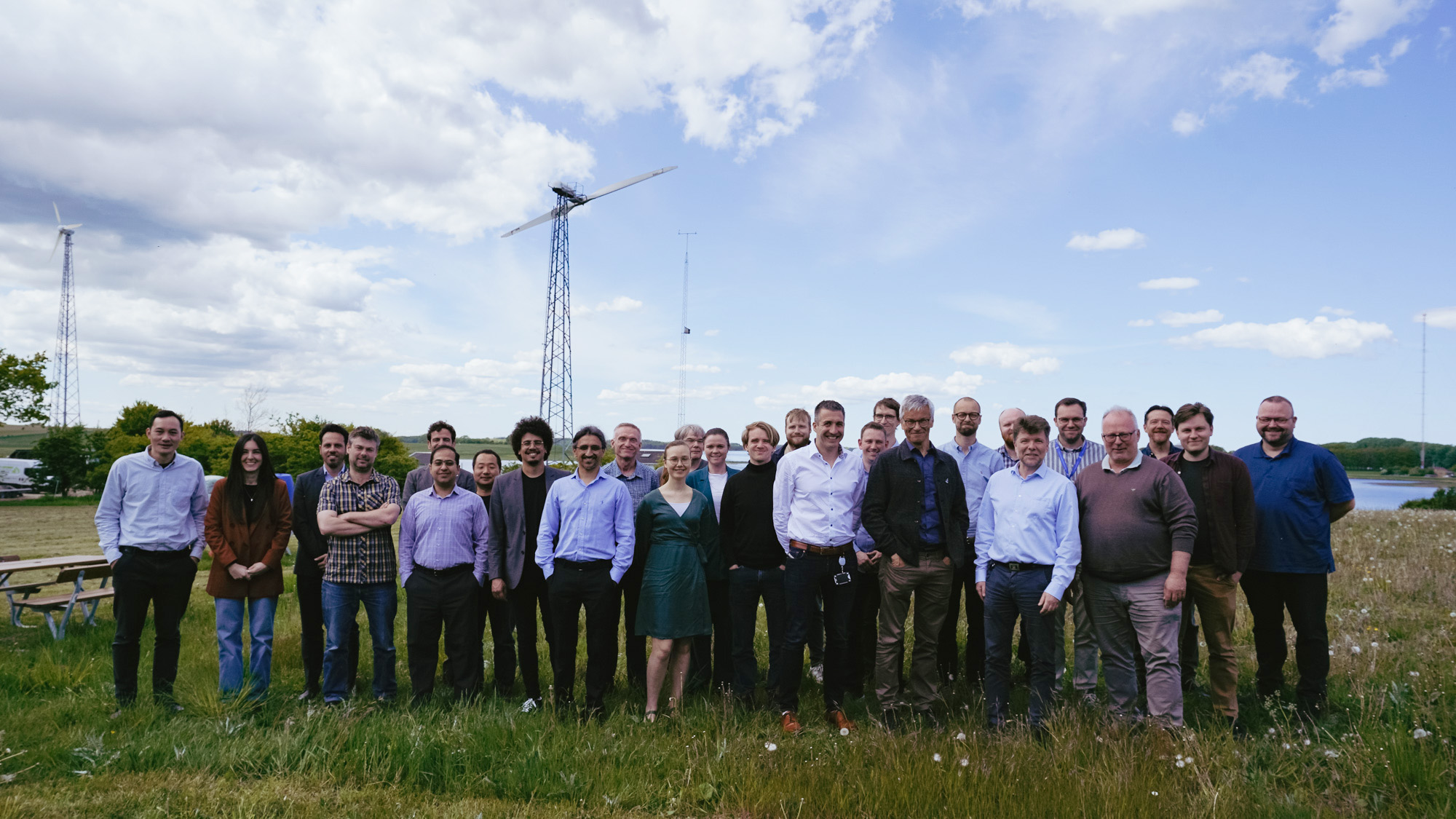
ReliaBlade-2 group photo
Group photo of the ReliaBlade-2 team